
Biodiversity must be protected always and at all costs. Every natural system is richer, stronger, and more resilient the more it is made up of diverse elements. This golden rule applies to great forests just as it does to small patches of land set into city concrete. At Orti Dipinti in Florence, our community urban garden, we apply this fundamental principle daily. We don’t just grow vegetables; we build a true plant community where biodiversity is the key to a healthy and bountiful harvest. Let’s discover together how the magic of companion planting can transform the way we live and cultivate our city.
What exactly is vegetable companion planting?
Companion planting is the agricultural and ecological practice of growing different plant species close together to take advantage of their mutually beneficial relationships. Instead of planting entire raised beds with just one variety (monoculture), it is preferable to mix vegetables, flowers, and aromatic herbs.
This technique imitates what happens spontaneously in nature. Growing side by side, plants with different characteristics help each other in surprising ways: some offer shade to those sensitive to direct sunlight, others explore different soil layers with their roots without competing, and still others release substances into the soil that nourish their neighbors. It is silent but extremely effective teamwork that reduces the need for external interventions and chemical fertilizers, promoting truly ecological urban gardening.
Why is urban biodiversity so important?
Urban biodiversity is fundamental because it makes city ecosystems healthier, self-regulating, and much more resilient to climate change. The more diverse an environment is, the less vulnerable it will be.
In a city context like Florence, creating oases rich in diverse plant species means offering a vital refuge to pollinating insects such as bees, bumblebees, and butterflies, as well as attracting small natural predators (like ladybugs) that help us keep pests under control. A soil rich in biodiversity is also biologically more alive: fungi, good bacteria, and earthworms thrive, creating a fertile substrate that better stores water and carbon dioxide.
What are the concrete benefits for the plants?
The main benefits include more vigorous growth, a natural defense against diseases and pests, and even an improvement in the flavor of the harvested fruits.
When two compatible plants are placed together, the benefits are tangible. Some aromatic species, thanks to their strong essential oils, can mask the scent of vegetables, confusing harmful insects that can no longer find their prey. Other plants, like legumes (beans, peas), have the extraordinary ability to capture nitrogen from the air and fix it in the soil, making it available to “hungrier” vegetables like pumpkins or cabbages.
What are the “golden couples” to plant next to each other in our garden?
The best couples are those that protect or nourish each other, like the classic pairing of tomato and basil, or the alliance between carrots and onions.
Tomato and basil don’t just go well together on the plate: planted close by, basil repels aphids and whiteflies while simultaneously improving the tomatoes’ flavor. Another famous companion planting is that between onions and carrots: the onion’s smell repels the carrot fly, while the carrot’s scent keeps the onion fly away.
We always recommend including flowers like the Marigold (Tagetes) among the vegetables, as its roots secrete substances capable of repelling nematodes, microscopic worms that are harmful to plant roots.
Are there vegetables that should never be planted close together?
Yes, some plants compete for the same nutrients or transmit the same diseases to one another, which is why they should never be grown too close together, such as potatoes and tomatoes.
Belonging to the same botanical family (Solanaceae), potatoes and tomatoes are susceptible to the same fungi, such as late blight; if one gets sick, it quickly infects the other. Furthermore, since both vegetables demand a lot of energy from the soil, they would end up stealing nutrients from one another. The combination of garlic (or onion) and legumes (beans and peas) is also not recommended, because the substances released by alliums inhibit the growth of nitrogen-fixing bacteria living on the legume roots.
How do we apply these principles at Orti Dipinti in Florence?
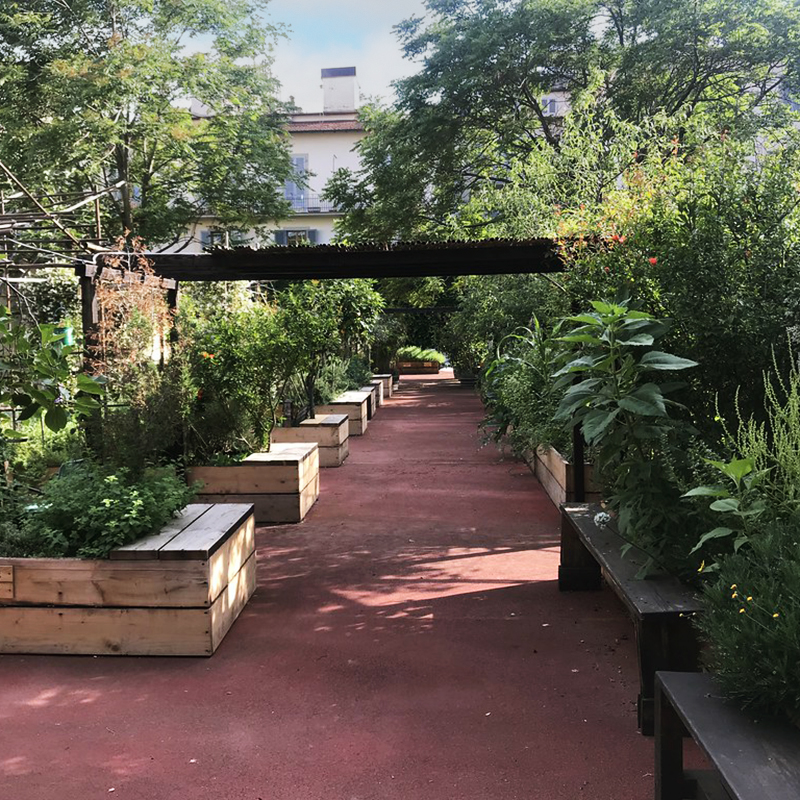
At Orti Dipinti, we apply these rules by carefully designing every single raised bed, transforming our space into a plant mosaic where each vegetable variety takes advantage of the beneficial relationships with adjacent plants.
When we prepare for sowing or transplanting, we leave nothing to chance. We study plant heights to guarantee the right amount of light for all, alternate leafy crops with root crops, and surround the most delicate vegetables with strong aromatic herbs. This approach not only maximizes the harvest in a limited urban space but also creates a wonderfully aesthetic, fragrant, and vibrant environment.
Where can I find a reliable companion planting chart?
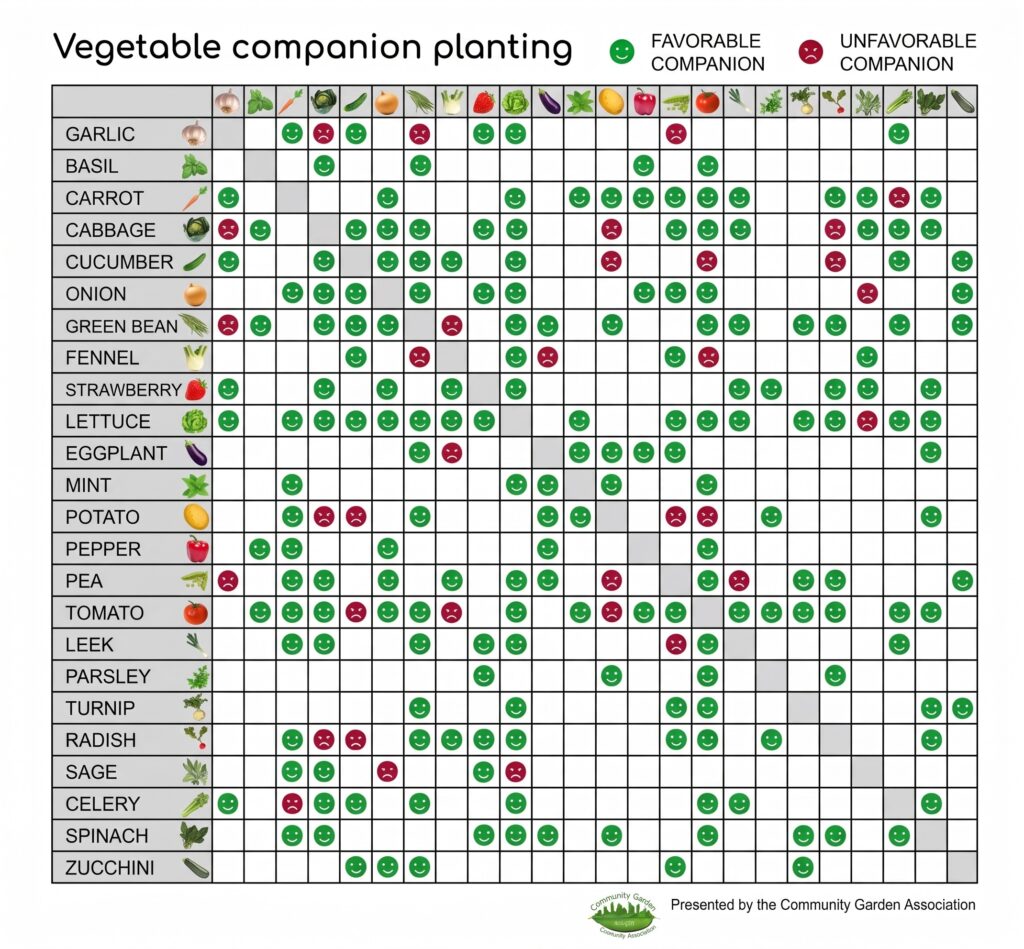
You can use the special companion planting chart created by us at Orti Dipinti, based on field experience and specifically designed for those growing in urban contexts.
Based on the cross-study of various agronomic sources and our daily practice in the garden, we have synthesized the information into a practical, easy-to-consult tool. You can download and print this chart directly from our website. Keep it handy on your balcony, terrace, or in your garden: it will become your compass for designing a more harmonious, healthy, and productive green space
The earth teaches us every day that isolation weakens, while collaboration and inclusion generate abundance. Just as the plants in our garden grow stronger by supporting each other, our city life is also enriched when we come together around shared values. Caring for biodiversity is a commitment that brings joy, serenity, and tangible fruits. We warmly invite you to come visit us at Orti Dipinti in Florence: drop by to discover our companion planting in person, participate in our activities, and become part of this wonderful human and plant ecosystem. We look forward to seeing you in the Gardens!